
3D Renderings for Real Estate Developers: How to Sell the Vision Before Construction Is Complete
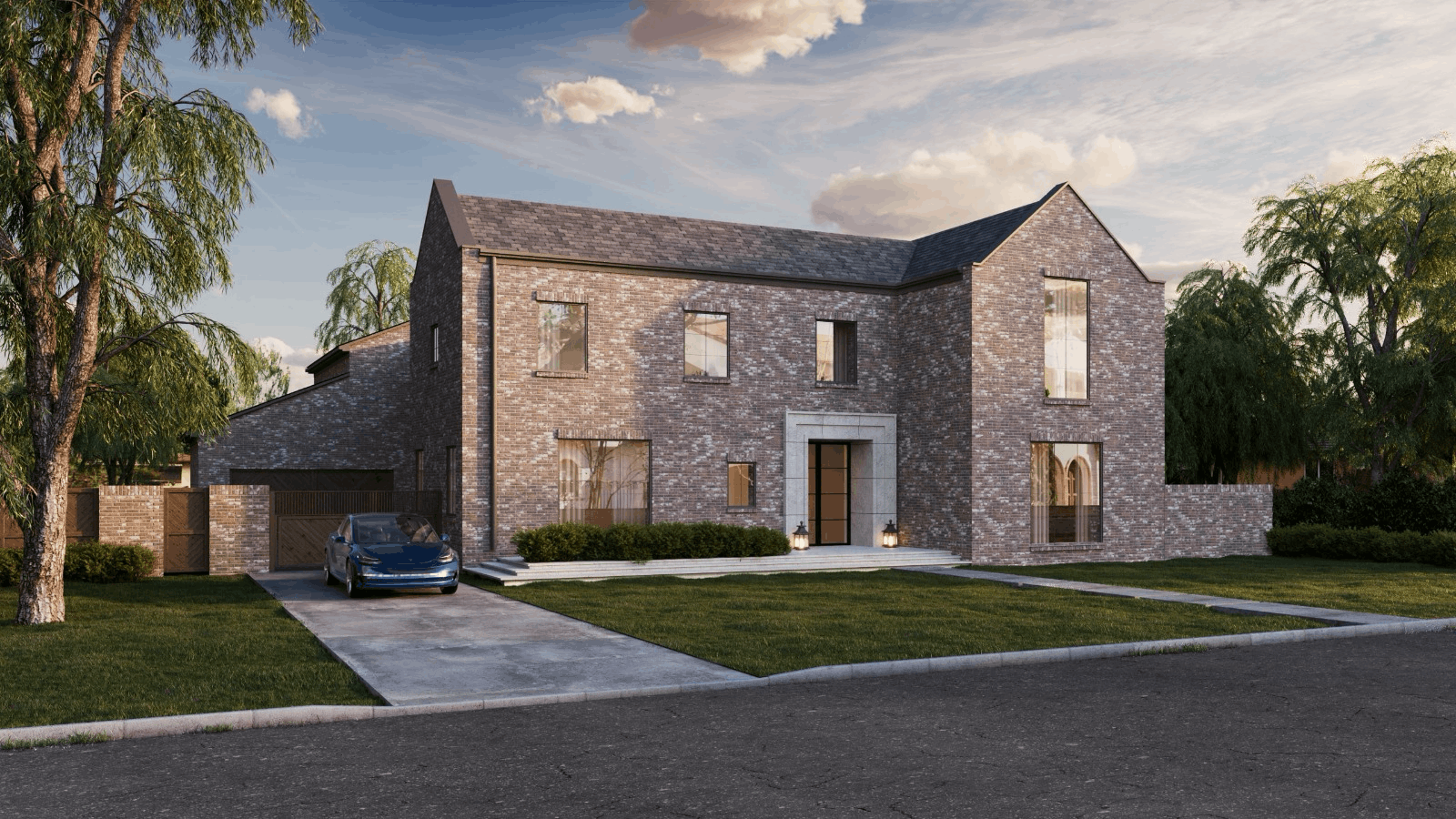
Before a new home exists physically, buyers are being asked to understand it through plans, elevations and imagination. That is easy for an architect or builder who has lived with the design for months. It is much harder for a consumer seeing the project for the first time.
3D renderings help close that gap. A well-planned visualization set can show exterior architecture, interior finishes, room relationships and the overall feeling of a future home before professional photography is possible.
They also fit into the broader way I use AI for real estate marketing to connect visualization, content, SEO and digital tools around a clear buyer journey.
Milica’s Houston new construction marketing services integrate visualization with the broader sales process so renderings are not isolated design images. They become working assets for the project website, pre-sales, broker outreach, launch campaigns and buyer conversations.
What Is a Real Estate Development Rendering?
A rendering is a computer-generated image created from architectural information such as plans, elevations, material selections and design references. Depending on the purpose, it can range from a simple massing view to a highly detailed photorealistic scene.
For marketing, the goal is not merely technical accuracy. The image also needs to communicate the parts of the design a buyer cares about: curb appeal, scale, natural light, finish quality, furniture relationships, outdoor areas and how the home may feel when complete.
Renderings should be based on the most current design information available and updated when major design decisions change. Marketing should also make it clear when an image is an artist’s rendering rather than a photograph of completed work.
Exterior Renderings: Sell the Architecture First
Exterior renderings are usually the most important early asset because they establish the project identity. They can show material combinations, rooflines, windows, landscaping concept, driveways and the relationship between multiple structures.
For a single spec home, one strong street-level hero view may be enough to launch early marketing. A luxury build may benefit from several angles, including a twilight scene. A townhome development may need a broader community view plus closer views that help buyers understand individual units.
If the project is multi-unit, pair the exterior rendering with a buyer-friendly site plan. The guide to marketing a Houston townhome development explains how those two assets work together.
Interior Renderings: Focus on the Decision-Critical Rooms
Developers do not always need to render every room. Prioritize the spaces that define the purchase: kitchen, main living area, primary suite, primary bath, significant outdoor living or an unusual architectural feature.
Interior visualization is especially useful when finish selections are a major part of the project’s value. It can show cabinetry tone, stone, flooring, lighting and furniture scale more effectively than a finish board alone.
However, the image should not quietly introduce features that are not included. If furnishings, landscaping, views or upgrades are illustrative, the final marketing should label or explain that appropriately.
Aerial and Site-Context Renderings
An aerial or elevated view can solve a different problem: understanding context. For a multi-unit project, it can show how homes relate to one another, how access works and where outdoor spaces sit. For a larger development, it can help explain the project’s relationship to streets or nearby amenities.
These views are most useful when they simplify something a buyer would otherwise struggle to understand from a technical plan. They should not replace a formal survey, plat or site plan where those documents are required for a transaction.
Houston developers can reference the City of Houston Planning & Development regulations for current municipal information related to plats, site plans and development review.
Renderings vs. Floor Plans
A rendering answers “What could this feel like?” A floor plan answers “How does it work?” Strong pre-construction marketing usually needs both.
A beautiful kitchen image may create desire, but the floor plan tells the buyer where the kitchen sits relative to the dining room, pantry, garage and stairs. Conversely, a two-dimensional plan may be technically clear but still fail to communicate ceiling height, daylight or material quality.
Using the two together gives buyers both emotion and logic.
Renderings vs. Photography
Renderings are not a permanent substitute for photography. They are a bridge.
- Early stage: Lead with approved renderings and plans.
- Mid-construction: Combine renderings with real progress photography.
- Near completion: Begin photographing finished details.
- Completed home: Professional photography should become the primary visual record, with renderings retained only when they add useful context.
This transition is especially important for selling a Houston spec home, where the campaign can evolve over many months.
How Renderings Support Pre-Sales
Pre-sales require buyers to make sense of a future product. Visualization can give early inquiries something concrete to discuss: a specific facade, kitchen concept, view, finish palette or plan.
Renderings also make email and broker outreach more effective because they provide an immediate visual anchor. A message that says “new three-home development coming soon” is abstract. A strong image plus a site plan and floor plan makes the project understandable in seconds.
For the full workflow, see how to pre-sell new construction homes in Houston.
How Developers Can Reuse One Rendering Set
A well-produced rendering should not live in one brochure. The same core assets can support the project website, listing marketing, email campaigns, social media, paid ads, construction signage, investor or lender presentations, broker previews and downloadable sales materials.
Different formats may be needed. A website hero image should leave room for text. Social posts may require vertical crops. Signage needs enough resolution to print large. A broker PDF may need both wide and detailed views.
Planning those uses before production helps the visualization team frame scenes that work in more than one channel.
Use Renderings to Strengthen the Project Website
A dedicated project site can sequence the visuals intentionally: hero exterior, project story, site plan, floor plans, key interiors, features, availability and inquiry form. The result is much more persuasive than dropping every image into one gallery.
The website can then connect to the broader Houston new construction marketing strategy and relevant Houston neighborhood guides. Luxury projects can also link to Milica’s Houston luxury real estate resource where that context is useful.
What Developers Should Provide to the Visualization Team
Better inputs usually produce better outputs. Prepare the most current architectural plans and elevations, site plan, material selections, finish schedules where available, lighting direction, landscape concept and clear references for any custom design elements.
Also identify what is still undecided. It is better to flag an unresolved finish than to let a rendering establish an expectation the project later changes.
For revisions, consolidate feedback. A single coordinated mark-up from the project team is more efficient than separate comments from the architect, builder, designer and marketing team that may conflict.
How Photorealistic Should a Rendering Be?
The answer depends on use. A concept-stage internal image may only need to communicate massing and material direction. A public sales image should generally be polished enough that a buyer can understand the intended architecture without being distracted by obvious modeling shortcuts.
Photorealism is not the same as over-staging. The best sales renderings look believable and proportionate. They use furniture, landscaping, lighting and people sparingly to communicate scale and lifestyle without obscuring the architecture.
Common Rendering Mistakes in Real Estate Marketing
The most damaging errors are not artistic. They are information errors: showing the wrong window configuration, a material that was removed from the scope, an unrealistic view, landscaping that hides important site conditions or furniture that makes rooms appear larger than they are.
Another common mistake is creating only one dramatic image. Buyers may still need a clean daylight exterior, a site explanation and a floor plan. Marketing visualization should be designed around buyer questions, not just portfolio aesthetics.
Label Renderings Clearly
A simple “artist’s rendering,” “conceptual rendering” or similar label can help distinguish visualization from completed conditions. The exact language should be coordinated with the developer’s broker and legal advisers based on the project and marketing channel.
The broader principle is straightforward: use visualization to clarify the project, not to blur what has and has not been built.
How Milica Can Turn Visualization Into a Complete Sales Campaign
3D visualization is most valuable when it is connected to the sales strategy instead of treated as a standalone image. Milica can integrate renderings with project websites, floor plans, interactive experiences, launch assets, lead capture and listing representation. Learn more about Milica’s Houston new construction marketing services.
- Listing Representation: A marketing-first approach coordinated around inventory, buyer interest and sales execution.
- Custom Project Websites & Landing Pages: Digital experiences for the project story, plans, availability, visuals and inquiries.
- 3D Exterior and Interior Renderings: Visualization of architecture, finishes, layout and intended lifestyle.
- Floor Plans & Site Plans: Buyer-friendly presentation of layouts and unit relationships.
- Virtual Tours & Interactive Experiences: Tools that make future inventory more tangible.
- Launch Campaign Support: Coordinated assets designed to build awareness and engagement.
- Pre-Sales Marketing Strategy: Buyer messaging, release timing, progress content and broker outreach.
- Lead Capture & Inquiry Support: Structured forms and intake for qualified inquiries.
Contact Milica about a developer project to discuss the project type, stage, location, inventory and visualization needs.
Frequently Asked Questions
What types of 3D renderings are best for real estate marketing?
Most projects benefit from a strong exterior hero image, selected interior views and, for multi-unit developments, a context or site-oriented view. The exact set should be based on what buyers need to understand before completion.
Can renderings be used in listing marketing?
Renderings are commonly used to market homes under construction, subject to brokerage, listing-platform and legal requirements. They should be accurate and clearly identified as renderings rather than completed photography.
When should final photography replace renderings?
As soon as the completed home can be photographed professionally, real images should generally become the primary presentation. Renderings can remain as secondary context when they explain a view or design concept that photography does not.
What files are needed to create a real estate rendering?
Typical inputs include architectural plans, elevations, a site plan, material and finish selections, landscape direction and reference imagery. The more current and coordinated the inputs are, the fewer avoidable revisions are usually required.