How to Market a Townhome Development in Houston
Marketing one townhome is a listing assignment. Marketing an entire townhome development is a product launch.
A developer may be selling several homes at once, often with similar floor plans, shared architecture and overlapping timelines. Buyers need to understand not only the individual residence but also the project layout, unit differences, location story, release plan and what makes the development more compelling than nearby new construction or resale options.
Milica’s Houston new construction marketing services for developers and builders are built around that broader launch: brokerage representation supported by project websites, renderings, floor and site plans, lead capture and pre-sales marketing.
Start With the Development Positioning
Before naming units or buying ads, define why this project exists. Is the value proposition location, architecture, larger floor plans, a quieter residential pocket, outdoor space, premium finishes, lock-and-leave convenience, proximity to employment or something else?
The marketing should reduce the answer to a few defensible ideas that can be repeated consistently. A project becomes harder to understand when the website says “luxury,” the brochure says “urban lifestyle,” the listing emphasizes square footage and social media focuses only on finishes.
Positioning should come from the actual product and competitive set. Review nearby active, pending and recent new construction. Compare lot configuration, parking, stairs, bedrooms, outdoor space, finish level, HOA structure if applicable and overall price. The most persuasive message is usually specific rather than grand.
Give the Development Its Own Visual Identity
A multi-unit project benefits from a consistent visual system. That can be as simple as a project name, typography, colors, site-plan style and a repeatable way to present unit numbers. The goal is not to over-brand a small development. It is to make every touchpoint feel like the same project.
The same identity should appear on the project website, brochure, signage, social graphics, agent materials and email updates. Consistency makes the project easier to recognize and can improve the perceived professionalism of the launch.
Make the Site Plan One of the Main Sales Tools
For townhome buyers, unit position can matter almost as much as floor plan. End units, driveway access, orientation, outdoor areas, proximity to the street and neighboring structures may affect preference.
A buyer-facing site plan should be simplified and readable on a phone. Each residence should have a consistent identifier. Availability should be easy to update. If a project uses addresses that are not yet familiar to buyers, use unit labels alongside addresses until the community is complete.
Houston developers should also make sure site-plan marketing does not get ahead of official approvals. The City of Houston Planning & Development regulations explain the city’s subdivision and site-plan framework, including requirements that can affect plats, access, setbacks, parking and related development review.
Use Renderings to Show the Whole Community
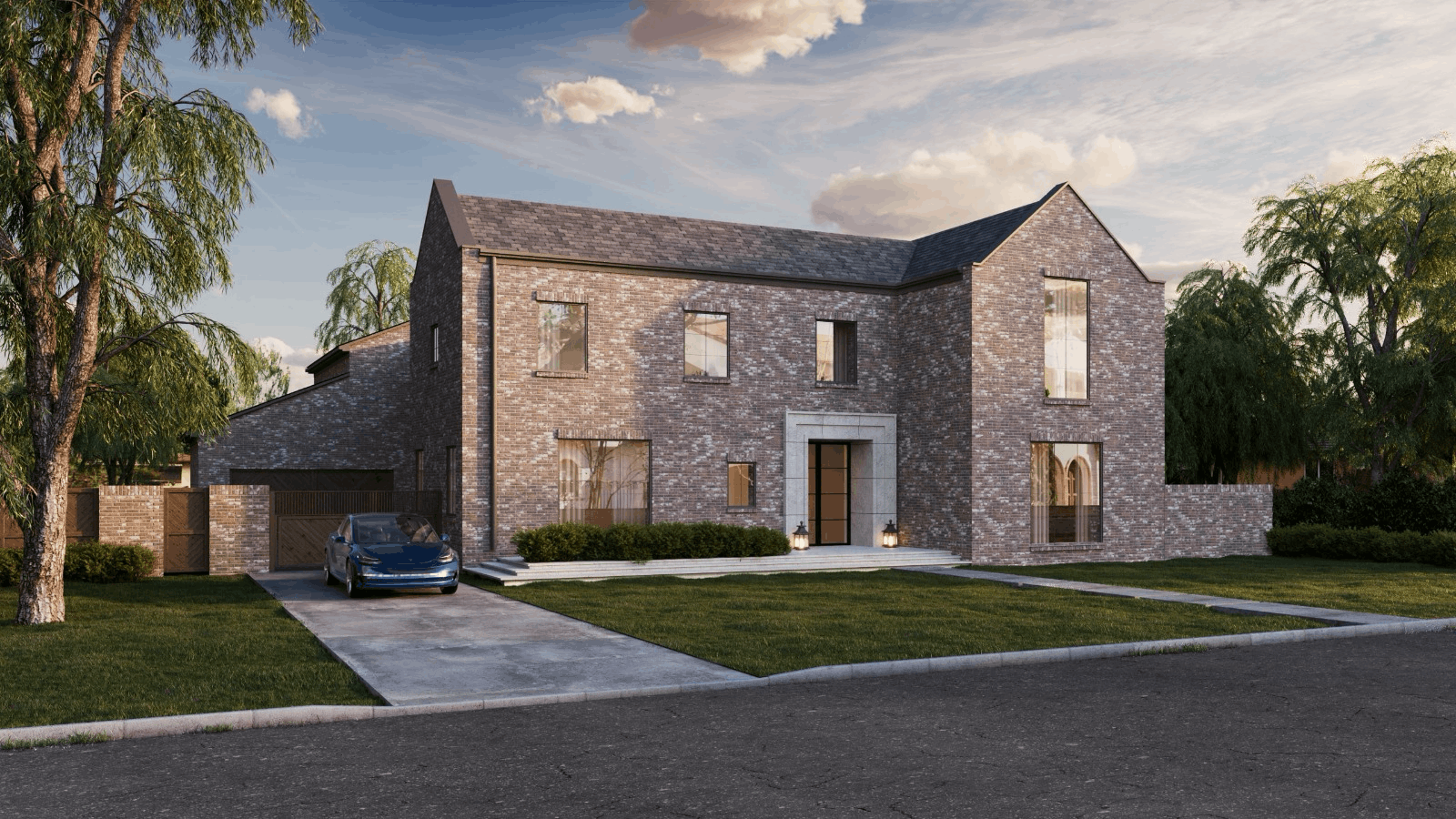
A row of framed walls is difficult for most buyers to interpret. A strong exterior rendering can show the finished rhythm of the development, landscape concept, materials and relationship between units. Interior renderings can help explain a premium finish package before model photography exists.
For a townhome project, consider creating more than one angle. A street-level hero image may sell curb appeal, while a slightly elevated view can explain the site configuration. The rendering set should also include the most decision-critical interiors rather than trying to visualize every room.
See 3D renderings for real estate developers for a deeper guide to selecting views and reusing visualization across marketing channels.
Build a Project Website Around Unit Comparison
A generic listing page often forces buyers to open several nearly identical records and figure out the differences themselves. A project website can make comparison easier.
Consider a main project page plus concise plan or unit sections. Show which floor plans are shared, what varies by unit, current availability and how to inquire. Keep the page current: a beautiful website with stale availability can create more frustration than confidence.
The website should also include neighborhood context. Houston is highly submarket-driven, and townhome buyers often compare location as carefully as interior finishes. Milica’s Houston neighborhoods guide can be the broad internal hub, with direct links to the specific community where the development sits.
For example, projects in Montrose, Rice Military, the Washington Corridor, the Houston Heights or Spring Branch can connect buyers to deeper local content instead of repeating generic “close to everything” claims.
Market the Neighborhood With Objective Information
Location marketing should help a buyer evaluate the area. Useful content can cover nearby parks, retail districts, major roads, employment centers, trail access, dining nodes, transit where relevant and housing context.
Avoid defining the “ideal resident” using protected characteristics or family composition. Housing advertising is subject to fair-housing law, and the official HUD Fair Housing Act overview explains the protected classes under federal law. The safest and most useful approach is to describe the property and objective location attributes rather than who should live there.
Create a Pre-Sales Funnel Before the First Unit Is Finished
If the project is marketable before completion, do not wait for final photography to collect interest. A pre-sales funnel can start with renderings, plans, the project story and a form that captures unit or floor-plan preference.
Then give those leads a reason to stay engaged: construction updates, new renderings, finish previews, release announcements, agent previews and appointment opportunities. The full workflow is covered in how to pre-sell new construction homes in Houston.
Decide How Inventory Will Be Released
A developer with six, ten or twenty homes needs a clearer inventory process than a seller with one property. Decide whether all units will be released together or in phases. Define how pricing changes will be controlled. Establish who can mark a unit reserved, under contract or available.
This is also where site-plan accuracy matters. The website, broker packet and sales team should all show the same status. Conflicting inventory information creates unnecessary calls and erodes trust.
Give Brokers a Townhome-Specific Sales Kit
Local agents need a quick way to understand the project. A broker kit can include the project summary, current availability, plan matrix, site plan, renderings, finish highlights, location map, appointment instructions and the correct registration or inquiry process.
Think about the questions an agent will receive from a buyer: Which units are end units? Which have rooftop terraces? Is there guest parking? What is the expected completion sequence? Are plans identical? Is there an HOA? What changes can still be selected? The marketing package should make those answers easy to find.
Use Construction Milestones to Create Momentum
Townhome construction creates repeated visual moments: vertical framing, rooflines, windows, exterior cladding, kitchens, lighting and landscaping. Each milestone can be used to reintroduce the project to the market.
As the homes become photogenic, gradually replace conceptual visuals with real images. A side-by-side “rendering to reality” post can be particularly effective when the final product closely matches the original design.
Differentiate Units Without Cannibalizing Your Own Listings
If multiple listings are active, avoid publishing five pages with nearly identical copy. Buyers and search engines both benefit from meaningful differentiation.
The project page should own the broad development story. Individual unit pages can focus on the specific plan, position, exposure, outdoor area, finish package or completion status. Where the homes are truly identical, keep the unit pages concise and let the project page carry the depth.
Townhome Marketing for Investor-Backed Projects
Some developments are built with a resale strategy, while others may attract investors evaluating rental demand and exit value. When investment is a legitimate part of the project story, link buyers to Milica’s Houston investment property guidance rather than making unsupported return claims.
Marketing should never guarantee appreciation, rent or investment performance. Investors need property-level analysis, financing assumptions, taxes, insurance, expenses and their own risk assessment.
How Milica Can Help Market a Houston Townhome Development
Townhome projects often require both project-level storytelling and unit-level sales execution. Milica can coordinate the website, inventory, visuals, lead process and listing strategy as units move from construction to sale. Learn more about Milica’s Houston new construction marketing services.
- Listing Representation: Marketing-first project representation coordinated around inventory and buyer interest.
- Custom Project Websites & Landing Pages: Digital experiences for the project story, plans, availability and inquiries.
- 3D Exterior and Interior Renderings: Visualization of architecture, finishes, layout and intended lifestyle.
- Floor Plans & Site Plans: Buyer-friendly presentation of layouts, unit relationships and inventory.
- Virtual Tours & Interactive Experiences: Tools that make future inventory more tangible.
- Launch Campaign Support: Coordinated assets designed to build awareness and engagement.
- Pre-Sales Marketing Strategy: Buyer messaging, release timing, progress content and broker outreach.
- Lead Capture & Inquiry Support: Structured forms and intake for qualified inquiries.
Request a project review with Milica to discuss the project type, stage, location, inventory and marketing needs.
Frequently Asked Questions
Does a small townhome project need its own website?
A two- or three-unit project may be served by a strong landing page, while larger or more complex developments often benefit from a dedicated project experience. The key is giving buyers one current place to compare plans, units and availability.
What should a townhome site plan show?
At minimum, show the unit layout, clear identifiers, access and orientation. Depending on the project, it may also be useful to show driveways, guest parking, common areas, patios or yards and current availability.
Should every townhome have its own listing page?
Often yes when units are separately offered, but the broader project story should live on a central development page. Individual pages should emphasize real differences rather than duplicating the same copy.
How early can I start marketing townhomes under construction?
Marketing can begin when the project has enough reliable information to present accurately. Early campaigns often use approved renderings, plans and construction updates, then transition toward photography as the homes near completion.