'%3e%3cg%20clip-path='url(%23clip1_0_282)'%3e%3cg%20clip-path='url(%23clip2_0_282)'%3e%3cpath%20d='M20%2039.5C30.7696%2039.5%2039.5%2030.7696%2039.5%2020C39.5%209.23045%2030.7696%200.5%2020%200.5C9.23045%200.5%200.5%209.23045%200.5%2020C0.5%2030.7696%209.23045%2039.5%2020%2039.5Z'%20stroke='white'%20stroke-width='0.5'/%3e%3cmask%20id='mask0_0_282'%20style='mask-type:luminance'%20maskUnits='userSpaceOnUse'%20x='11'%20y='7'%20width='18'%20height='33'%3e%3cpath%20d='M28.2%207H11V39.2H28.2V7Z'%20fill='white'/%3e%3c/mask%3e%3cg%20mask='url(%23mask0_0_282)'%3e%3cpath%20d='M27%2024.8L27.9%2019.2H22.6V15.3C22.6%2013.7%2023.2%2012.5%2025.6%2012.5H28.2V7.4C26.8%207.2%2025.2%207%2023.8%207C19.2%207%2016%209.8%2016%2014.8V19.2H11V24.8H16V38.9C17.1%2039.1%2018.2%2039.2%2019.3%2039.2C20.4%2039.2%2021.5%2039.1%2022.6%2038.9V24.8H27Z'%20fill='white'/%3e%3c/g%3e%3c/g%3e%3c/g%3e%3c/g%3e%3cdefs%3e%3cclipPath%20id='clip0_0_282'%3e%3crect%20width='40'%20height='40'%20fill='white'/%3e%3c/clipPath%3e%3cclipPath%20id='clip1_0_282'%3e%3crect%20width='40'%20height='40'%20fill='white'/%3e%3c/clipPath%3e%3cclipPath%20id='clip2_0_282'%3e%3crect%20width='40'%20height='40'%20fill='white'/%3e%3c/clipPath%3e%3c/defs%3e%3c/svg%3e)
'%3e%3cg%20clip-path='url(%23clip1_0_291)'%3e%3cg%20clip-path='url(%23clip2_0_291)'%3e%3cpath%20d='M20%2039.5C30.7696%2039.5%2039.5%2030.7696%2039.5%2020C39.5%209.23045%2030.7696%200.5%2020%200.5C9.23045%200.5%200.5%209.23045%200.5%2020C0.5%2030.7696%209.23045%2039.5%2020%2039.5Z'%20stroke='white'%20stroke-width='0.5'/%3e%3cmask%20id='mask0_0_291'%20style='mask-type:luminance'%20maskUnits='userSpaceOnUse'%20x='8'%20y='8'%20width='24'%20height='24'%3e%3cpath%20d='M32%208H8V32H32V8Z'%20fill='white'/%3e%3c/mask%3e%3cg%20mask='url(%23mask0_0_291)'%3e%3cpath%20d='M20%208C16.7425%208%2016.3325%208.015%2015.0525%208.0725C13.775%208.13%2012.9025%208.3325%2012.14%208.63C11.35%208.9375%2010.6825%209.3475%2010.015%2010.0125C9.3475%2010.68%208.9375%2011.35%208.63%2012.1375C8.3325%2012.9%208.13%2013.7725%208.0725%2015.05C8.015%2016.33%208%2016.74%208%2019.9975C8%2023.255%208.015%2023.665%208.0725%2024.945C8.1325%2026.2225%208.3325%2027.095%208.63%2027.8575C8.9375%2028.6475%209.3475%2029.315%2010.015%2029.9825C10.6825%2030.65%2011.35%2031.06%2012.14%2031.3675C12.9025%2031.665%2013.775%2031.8675%2015.0525%2031.925C16.3325%2031.9825%2016.7425%2031.9975%2020%2031.9975C23.2575%2031.9975%2023.6675%2031.9825%2024.9475%2031.925C26.225%2031.8675%2027.0975%2031.665%2027.8625%2031.3675C28.6525%2031.06%2029.32%2030.65%2029.9875%2029.9825C30.655%2029.315%2031.065%2028.645%2031.3725%2027.8575C31.6675%2027.095%2031.87%2026.2225%2031.93%2024.945C31.9875%2023.665%2032.0025%2023.2575%2032.0025%2019.9975C32.0025%2016.7375%2031.9875%2016.33%2031.93%2015.05C31.87%2013.7725%2031.6675%2012.9%2031.3725%2012.1375C31.065%2011.3475%2030.655%2010.68%2029.9875%2010.0125C29.32%209.345%2028.6525%208.935%2027.8625%208.63C27.0975%208.3325%2026.225%208.13%2024.9475%208.0725C23.6675%208.015%2023.26%208%2020%208ZM18.9225%2010.1625C19.2425%2010.1625%2019.5975%2010.1625%2020%2010.1625C23.205%2010.1625%2023.5825%2010.175%2024.85%2010.2325C26.02%2010.285%2026.655%2010.4825%2027.0775%2010.645C27.6375%2010.8625%2028.0375%2011.1225%2028.4575%2011.5425C28.8775%2011.9625%2029.1375%2012.3625%2029.355%2012.9225C29.52%2013.345%2029.715%2013.98%2029.7675%2015.15C29.825%2016.415%2029.8375%2016.795%2029.8375%2019.9975C29.8375%2023.2%2029.825%2023.58%2029.7675%2024.845C29.715%2026.015%2029.5175%2026.65%2029.355%2027.0725C29.1375%2027.6325%2028.8775%2028.03%2028.4575%2028.45C28.0375%2028.87%2027.6375%2029.13%2027.0775%2029.3475C26.655%2029.5125%2026.02%2029.7075%2024.85%2029.76C23.585%2029.8175%2023.205%2029.83%2020%2029.83C16.795%2029.83%2016.415%2029.8175%2015.15%2029.76C13.98%2029.705%2013.345%2029.51%2012.9225%2029.3475C12.3625%2029.13%2011.9625%2028.87%2011.5425%2028.45C11.1225%2028.03%2010.8625%2027.63%2010.645%2027.07C10.48%2026.6475%2010.285%2026.0125%2010.2325%2024.8425C10.175%2023.5775%2010.1625%2023.1975%2010.1625%2019.9925C10.1625%2016.7875%2010.175%2016.41%2010.2325%2015.145C10.285%2013.975%2010.4825%2013.34%2010.645%2012.9175C10.8625%2012.3575%2011.1225%2011.9575%2011.5425%2011.5375C11.9625%2011.1175%2012.3625%2010.8575%2012.9225%2010.64C13.345%2010.475%2013.98%2010.28%2015.15%2010.225C16.2575%2010.175%2016.685%2010.16%2018.9225%2010.1575V10.1625ZM26.405%2012.155C25.61%2012.155%2024.965%2012.8%2024.965%2013.595C24.965%2014.39%2025.61%2015.035%2026.405%2015.035C27.2%2015.035%2027.845%2014.39%2027.845%2013.595C27.845%2012.8%2027.2%2012.155%2026.405%2012.155ZM20%2013.8375C16.5975%2013.8375%2013.8375%2016.5975%2013.8375%2020C13.8375%2023.4025%2016.5975%2026.1625%2020%2026.1625C23.4025%2026.1625%2026.1625%2023.405%2026.1625%2020C26.1625%2016.595%2023.405%2013.8375%2020%2013.8375ZM20%2016C22.21%2016%2024%2017.79%2024%2020C24%2022.21%2022.21%2024%2020%2024C17.79%2024%2016%2022.21%2016%2020C16%2017.79%2017.79%2016%2020%2016Z'%20fill='white'/%3e%3c/g%3e%3c/g%3e%3c/g%3e%3c/g%3e%3cdefs%3e%3cclipPath%20id='clip0_0_291'%3e%3crect%20width='40'%20height='40'%20fill='white'/%3e%3c/clipPath%3e%3cclipPath%20id='clip1_0_291'%3e%3crect%20width='40'%20height='40'%20fill='white'/%3e%3c/clipPath%3e%3cclipPath%20id='clip2_0_291'%3e%3crect%20width='40'%20height='40'%20fill='white'/%3e%3c/clipPath%3e%3c/defs%3e%3c/svg%3e)
'%3e%3cg%20clip-path='url(%23clip1_0_300)'%3e%3cg%20clip-path='url(%23clip2_0_300)'%3e%3cpath%20d='M20%2039.5C30.7696%2039.5%2039.5%2030.7696%2039.5%2020C39.5%209.23045%2030.7696%200.5%2020%200.5C9.23045%200.5%200.5%209.23045%200.5%2020C0.5%2030.7696%209.23045%2039.5%2020%2039.5Z'%20stroke='white'%20stroke-width='0.5'/%3e%3cmask%20id='mask0_0_300'%20style='mask-type:luminance'%20maskUnits='userSpaceOnUse'%20x='10'%20y='10'%20width='20'%20height='20'%3e%3cpath%20d='M30%2010H10V30H30V10Z'%20fill='white'/%3e%3c/mask%3e%3cg%20mask='url(%23mask0_0_300)'%3e%3cpath%20fill-rule='evenodd'%20clip-rule='evenodd'%20d='M30%2030H25.8923V23C25.8923%2021.0808%2025.1615%2020.0077%2023.6462%2020.0077C21.9923%2020.0077%2021.1308%2021.1231%2021.1308%2023V30H17.1692V16.6654H21.1308V18.4615C21.1308%2018.4615%2022.3231%2016.2577%2025.15%2016.2577C27.9769%2016.2577%2030.0038%2017.9846%2030.0038%2021.5577V30H30ZM12.4423%2014.9192C11.0923%2014.9192%2010%2013.8192%2010%2012.4577C10%2011.0962%2011.0923%2010%2012.4423%2010C13.7923%2010%2014.8846%2011.1%2014.8846%2012.4615C14.8846%2013.8231%2013.7923%2014.9231%2012.4423%2014.9231V14.9192ZM10.3962%2030H14.5269V16.6654H10.3962V30Z'%20fill='white'/%3e%3c/g%3e%3c/g%3e%3c/g%3e%3c/g%3e%3cdefs%3e%3cclipPath%20id='clip0_0_300'%3e%3crect%20width='40'%20height='40'%20fill='white'/%3e%3c/clipPath%3e%3cclipPath%20id='clip1_0_300'%3e%3crect%20width='40'%20height='40'%20fill='white'/%3e%3c/clipPath%3e%3cclipPath%20id='clip2_0_300'%3e%3crect%20width='40'%20height='40'%20fill='white'/%3e%3c/clipPath%3e%3c/defs%3e%3c/svg%3e)
'%3e%3cg%20clip-path='url(%23clip1_0_309)'%3e%3cg%20clip-path='url(%23clip2_0_309)'%3e%3cpath%20d='M20%2039.5C30.7696%2039.5%2039.5%2030.7696%2039.5%2020C39.5%209.23045%2030.7696%200.5%2020%200.5C9.23045%200.5%200.5%209.23045%200.5%2020C0.5%2030.7696%209.23045%2039.5%2020%2039.5Z'%20stroke='white'%20stroke-width='0.5'/%3e%3cmask%20id='mask0_0_309'%20style='mask-type:luminance'%20maskUnits='userSpaceOnUse'%20x='8'%20y='8'%20width='24'%20height='24'%3e%3cpath%20d='M32%208H8V32H32V8Z'%20fill='white'/%3e%3c/mask%3e%3cg%20mask='url(%23mask0_0_309)'%3e%3cpath%20d='M28.5032%2011.4875C26.2473%209.2401%2023.2475%208.00162%2020.0512%208C13.4636%208%208.10395%2013.3339%208.1007%2019.8917C8.09745%2021.979%208.64803%2024.0291%209.69561%2025.8367L8%2032L14.3342%2030.346C16.0801%2031.2935%2018.0453%2031.793%2020.0447%2031.793H20.0495C26.6354%2031.793%2031.9968%2026.4576%2032%2019.9014C32%2016.7243%2030.7592%2013.7365%2028.5032%2011.4875ZM20.0495%2029.785H20.0463C18.263%2029.785%2016.5154%2029.308%2014.9903%2028.4074L14.6265%2028.194L10.8666%2029.1754L11.8703%2025.5279L11.6332%2025.1544C10.6392%2023.578%2010.1114%2021.7559%2010.1146%2019.8949C10.1163%2014.4446%2014.5729%2010.0113%2020.0512%2010.0113C22.6871%2010.0049%2025.2159%2011.0493%2027.0723%2012.9103C28.9401%2014.7615%2029.9877%2017.2789%2029.9796%2019.903C29.9779%2025.3533%2025.5213%2029.7882%2020.0479%2029.7882L20.0495%2029.785Z'%20fill='white'/%3e%3cpath%20fill-rule='evenodd'%20clip-rule='evenodd'%20d='M17.0644%2014.92C16.8403%2014.4253%2016.6048%2014.4156%2016.392%2014.4059L15.8203%2014.3994C15.6205%2014.3994%2015.2973%2014.4738%2015.0245%2014.7713C14.7516%2015.0688%2013.9785%2015.7883%2013.9785%2017.2499C13.9785%2018.7115%2015.0488%2020.1246%2015.1982%2020.3234C15.3477%2020.5223%2017.2642%2023.6185%2020.2997%2024.8101C22.822%2025.7996%2023.3352%2025.6039%2023.8826%2025.5538C24.4299%2025.5037%2025.6496%2024.8343%2025.8981%2024.1407C26.1466%2023.4471%2026.1466%2022.8521%2026.0719%2022.7276C25.9972%2022.6031%2025.799%2022.5288%2025.4986%2022.38C25.1981%2022.2313%2023.7315%2021.5118%2023.4587%2021.4132C23.1858%2021.3145%2022.986%2021.2644%2022.7863%2021.5619C22.5865%2021.8594%2022.0148%2022.5288%2021.841%2022.7276C21.6672%2022.9265%2021.4934%2022.9507%2021.1946%2022.802C20.8958%2022.6533%2019.9343%2022.3396%2018.7941%2021.3275C17.9073%2020.5401%2017.308%2019.5668%2017.1326%2019.2693C16.9572%2018.9718%2017.1147%2018.8117%2017.2642%2018.663C17.3973%2018.5304%2017.563%2018.3153%2017.7124%2018.1423C17.8618%2017.9693%2017.9106%2017.8448%2018.0113%2017.646C18.112%2017.4471%2018.0616%2017.2741%2017.9869%2017.1254C17.9122%2016.9766%2017.3324%2015.5069%2017.066%2014.9184'%20fill='white'/%3e%3c/g%3e%3c/g%3e%3c/g%3e%3c/g%3e%3cdefs%3e%3cclipPath%20id='clip0_0_309'%3e%3crect%20width='40'%20height='40'%20fill='white'/%3e%3c/clipPath%3e%3cclipPath%20id='clip1_0_309'%3e%3crect%20width='40'%20height='40'%20fill='white'/%3e%3c/clipPath%3e%3cclipPath%20id='clip2_0_309'%3e%3crect%20width='40'%20height='40'%20fill='white'/%3e%3c/clipPath%3e%3c/defs%3e%3c/svg%3e)
'%3e%3cg%20clip-path='url(%23clip1_0_319)'%3e%3cg%20clip-path='url(%23clip2_0_319)'%3e%3cpath%20d='M22.8985%2019.1962L17.9387%2016.2911C17.8284%2016.2267%2017.6913%2016.2256%2017.58%2016.2893C17.4686%2016.3531%2017.3999%2016.4716%2017.3999%2016.6001V22.4098C17.3999%2022.538%2017.4686%2022.6568%2017.5796%2022.7205C17.6347%2022.752%2017.6963%2022.7678%2017.7579%2022.7678C17.8205%2022.7678%2017.8828%2022.7513%2017.9387%2022.7188L22.8985%2019.8144C23.0081%2019.7503%2023.0758%2019.6326%2023.0758%2019.5055C23.0758%2019.3784%2023.0085%2019.2603%2022.8985%2019.1962Z'%20fill='white'%20stroke='white'/%3e%3cpath%20d='M27.2715%2010.6895H12.8169C10.1853%2010.6895%208.04443%2012.8372%208.04443%2015.4767V23.5341C8.04443%2026.1741%2010.1853%2028.3213%2012.8169%2028.3213H27.2715C29.9031%2028.3213%2032.0439%2026.1736%2032.0439%2023.5341V15.4767C32.0439%2012.8372%2029.9031%2010.6895%2027.2715%2010.6895ZM31.0644%2023.5346C31.0644%2025.6343%2029.3629%2027.3422%2027.2715%2027.3422H12.8169C10.7255%2027.3422%209.02401%2025.6338%209.02401%2023.5346V15.4767C9.02401%2013.3774%2010.7255%2011.6691%2012.8169%2011.6691H27.2715C29.3629%2011.6691%2031.0644%2013.3774%2031.0644%2015.4767V23.5346Z'%20fill='black'%20stroke='white'/%3e%3cpath%20d='M20.0443%2039.0184C30.8211%2039.0184%2039.5574%2030.2821%2039.5574%2019.5053C39.5574%208.7285%2030.8211%20-0.0078125%2020.0443%20-0.0078125C9.26756%20-0.0078125%200.53125%208.7285%200.53125%2019.5053C0.53125%2030.2821%209.26756%2039.0184%2020.0443%2039.0184Z'%20stroke='white'%20stroke-width='0.5'/%3e%3c/g%3e%3c/g%3e%3c/g%3e%3cdefs%3e%3cclipPath%20id='clip0_0_319'%3e%3crect%20width='40'%20height='40'%20fill='white'/%3e%3c/clipPath%3e%3cclipPath%20id='clip1_0_319'%3e%3crect%20width='40'%20height='40'%20fill='white'/%3e%3c/clipPath%3e%3cclipPath%20id='clip2_0_319'%3e%3crect%20width='41'%20height='41'%20fill='white'%20transform='translate(-0.5%20-0.5)'/%3e%3c/clipPath%3e%3c/defs%3e%3c/svg%3e)


How to Pre-Sell New Construction Homes in Houston: A Developer’s Guide
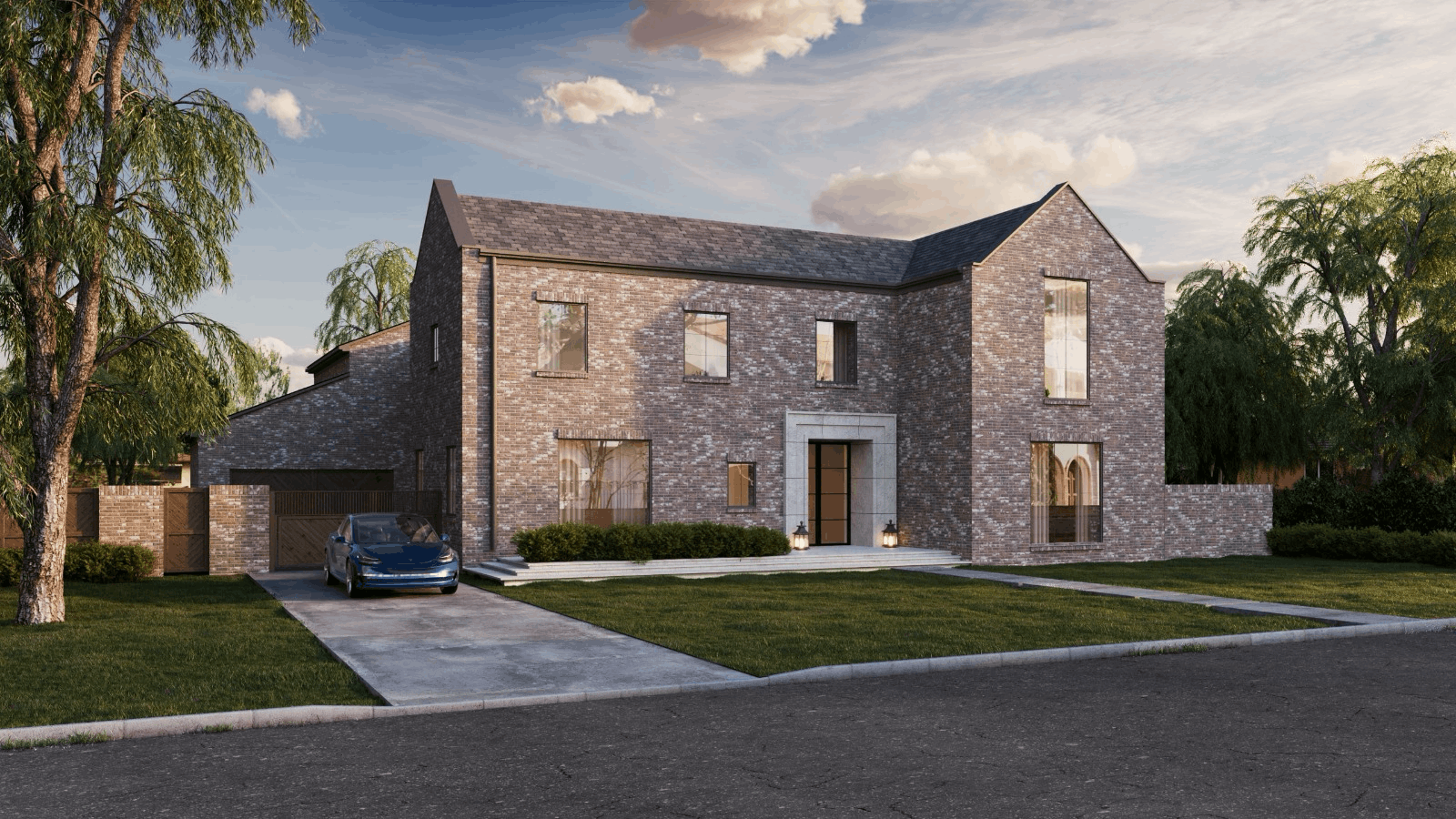
Pre-selling new construction is the process of building buyer interest—and, where the project and transaction structure allow, securing commitments—before a home is fully complete. For Houston builders and developers, a thoughtful pre-sales strategy can create earlier market feedback, improve launch visibility and give buyers more time to understand the product.
The key is credibility. Buyers are being asked to make decisions about a home they may not be able to walk through yet. That means the marketing must replace uncertainty with clear plans, accurate visuals, transparent updates and a reliable point of contact.
Modern tools can support that process; my guide to AI for real estate agents explains how I combine AI with SEO, content, video, CRM and analytics without replacing local judgment.
Milica’s Houston new construction marketing services support that process with project positioning, buyer-facing websites, 3D visuals, floor and site plans, launch materials and inquiry support.
What Does It Mean to Pre-Sell New Construction?
A pre-sale can mean different things depending on the project stage and contract structure. At the marketing level, it begins with generating interest before final completion. Prospects may join a priority list, request plans and pricing, attend a private preview, select a preferred unit or begin a formal transaction when the project is ready for that step.
Developers should coordinate contract language, deposits, disclosures, construction obligations and any cancellation or completion terms with their broker, attorney, title company and other appropriate professionals. Marketing should not promise legal or financial terms that have not been formally established.
When Should Pre-Sales Marketing Begin?
The best starting point is when the project is sufficiently defined to answer basic buyer questions with confidence. That may occur during late design, permitting or early construction. If the design is still changing substantially, the campaign should focus on project awareness rather than hard promises about specific finishes, dimensions or delivery dates.
A useful progression is: build awareness, capture interest, educate buyers, release more detailed information, qualify serious prospects, and then move into formal sales activity when the project team is ready. For the broader framework, read how to market a new construction development in Houston before it is built.
Give Buyers Something Concrete to Understand
The biggest obstacle in pre-sales is that the product exists mostly on paper. A buyer may see an address and a construction fence but still struggle to imagine the finished home. The marketing package should therefore answer both practical and emotional questions.
At minimum, consider a clear project overview, exterior rendering, buyer-friendly floor plan, site plan for multi-unit projects, finish direction, parking information, location context, estimated construction stage and a simple way to request updates.
The better the project is visualized, the less work the buyer has to do mentally. That is why 3D renderings for real estate developers can be particularly valuable early in the sales cycle.
Build a Priority Interest List
A pre-sales list is more useful when it captures intent instead of just email addresses. Ask prospects what they are interested in: floor plan, unit type, price range, preferred move timing or whether they are represented by an agent. Keep the form short enough that people will complete it, but structured enough that follow-up can be relevant.
Every inquiry should have a defined next step. That may be an automated confirmation followed by personal outreach, an invitation to receive a brochure, a scheduled project call or a notification when a release is announced.
Do not let early leads disappear into a general website inbox. The pre-sales period is when developers have the longest window to build trust with the people already paying attention.
Use a Dedicated Project Website as the Source of Truth
A project website should become the central location for current information. Social posts and ads change quickly; the website should hold the most complete, controlled version of the project story.
For a multi-unit project, the page can show unit availability and plan differences. For a single luxury build, it can focus more heavily on architecture, materials, lifestyle, location and the design team. For either type, every campaign should point back to one source where buyers can confirm details and make contact.
The site should also link to useful broader resources. An investor-backed project can connect naturally to Milica’s Houston investment properties guidance, while buyers comparing submarkets can explore the Houston neighborhoods guide.
Create a Release Strategy Instead of Posting Everything at Once
Developers should decide how and when pricing, plans and inventory will be released. Early interest may justify a private first look before a public launch. In a larger community, phased releases can simplify inventory management and help the team learn from buyer feedback.
The release plan should be real, not manufactured scarcity. If only certain units are available, say so. If pricing is preliminary, label it accurately. If finish selections depend on timing, explain the cutoff. Clarity reduces frustration and gives agents confidence in bringing clients to the project.
Market to Houston Agents Before the Public Launch
Local agents can become an important distribution network for a new project. Before public launch, consider a concise broker package with the project overview, renderings, floor plans, location map, release timing, registration or showing instructions and the correct contact for questions.
If construction access is limited, make that process easy to understand. If appointments are required, state it. If buyers should review plans before visiting, provide them. The easier the project is to show and explain, the easier it is for agents to include it in a client’s search.
Keep Pre-Sale Marketing Updated as Construction Changes
An early rendering can open the door, but buyers also want evidence that the project is moving forward. Progress photography, milestone videos and short construction updates can show the transition from plan to reality.
As soon as a finished feature can be photographed well, consider replacing or supplementing the rendering. Buyers should never have to guess whether an image is a rendering, a staged concept or actual construction. Accuracy is part of the trust-building process.
Use Paid Advertising Carefully
Paid social and digital advertising can help a developer reach more potential buyers, but housing advertising must be handled with fair-housing requirements in mind. Campaigns should focus on the property and legitimate location or product attributes rather than excluding or preferring protected groups. HUD provides an official Fair Housing Act overview.
The same principle applies to copy. Describe the home, the development and objective amenities. Avoid language that signals who a home is “for” based on protected characteristics.
Qualify Interest Without Creating Friction
A pre-sales lead is not automatically a ready buyer. The sales process should help determine whether the prospect understands the project stage, target price, financing needs, timeline and other transaction requirements.
The goal is not to turn the inquiry form into an interrogation. Collect the basics online, then handle the deeper conversation personally. For a developer, the quality of the follow-up can be just as important as the quantity of leads.
Pre-Sales for Townhome Developments and Spec Homes
Townhome projects add another layer because buyers may be comparing similar-looking units with important differences in orientation, end-unit position, outdoor space, parking or floor plan. A clean site plan and consistent unit naming are essential. The guide to marketing a townhome development in Houston covers project branding, site-plan presentation, inventory releases and neighborhood positioning.
A spec home may not have multiple units, but it can still benefit from pre-marketing while construction is underway. Renderings can create awareness before photography is ready, and progress updates can keep the property visible as it moves toward completion. See how to sell a spec home in Houston.
A Practical Houston Pre-Sales Checklist
Before launching, confirm that project facts are stable enough to market; renderings and plans are accurate; conceptual images are labeled; pricing and inventory processes are defined; the project website is ready; inquiry forms are tested; broker materials are current; follow-up ownership is clear; and every channel points to the same information.
Then create an update cadence. A lead who inquired three months before completion should not have to rediscover the project on their own.
How Milica Can Help With New Construction Pre-Sales
Pre-sales are strongest when the buyer experience, visuals, lead capture and brokerage process work together. Milica can help Houston developers turn plans and in-progress construction into a clearer buyer-facing launch. Learn more about Milica’s Houston new construction marketing services.
- Listing Representation: Marketing-first project representation coordinated around inventory, buyer interest and sales execution.
- Custom Project Websites & Landing Pages: A central place for plans, availability, visuals, downloads and inquiry paths.
- 3D Exterior and Interior Renderings: Visualization that makes architecture, finishes and layout understandable before completion.
- Floor Plans & Site Plans: Buyer-friendly plan presentation for layouts, unit relationships and inventory.
- Virtual Tours & Interactive Experiences: Tools that make future inventory more tangible.
- Launch Campaign Support: Coordinated assets designed to build awareness and engagement.
- Pre-Sales Marketing Strategy: Buyer messaging, release timing, progress content and broker outreach.
- Lead Capture & Inquiry Support: Structured forms and intake for qualified inquiries.
The services can be used selectively or as part of a coordinated project launch. Request a project review to discuss the project type, stage, location, inventory and marketing needs.
Frequently Asked Questions
Can a builder market a home before it is complete?
Yes. Builders commonly market homes during construction using renderings, floor plans, progress photography and project information, provided the materials are accurate and do not misrepresent completed conditions or unapproved features.
What should be on a pre-construction landing page?
A strong page usually includes the project story, location, renderings, floor plans, site plan when relevant, features, current stage, availability or release information, FAQ and a clear inquiry form.
Are 3D renderings necessary for pre-sales?
Not always, but they can be especially useful when buyers cannot yet understand the design from photographs. The more visually complex or premium the project, the more value good visualization can provide.
How do I keep pre-sale leads engaged during construction?
Use meaningful updates: construction milestones, new photos, design details, release announcements, floor-plan explanations, neighborhood content and clear invitations to schedule a conversation or preview.